
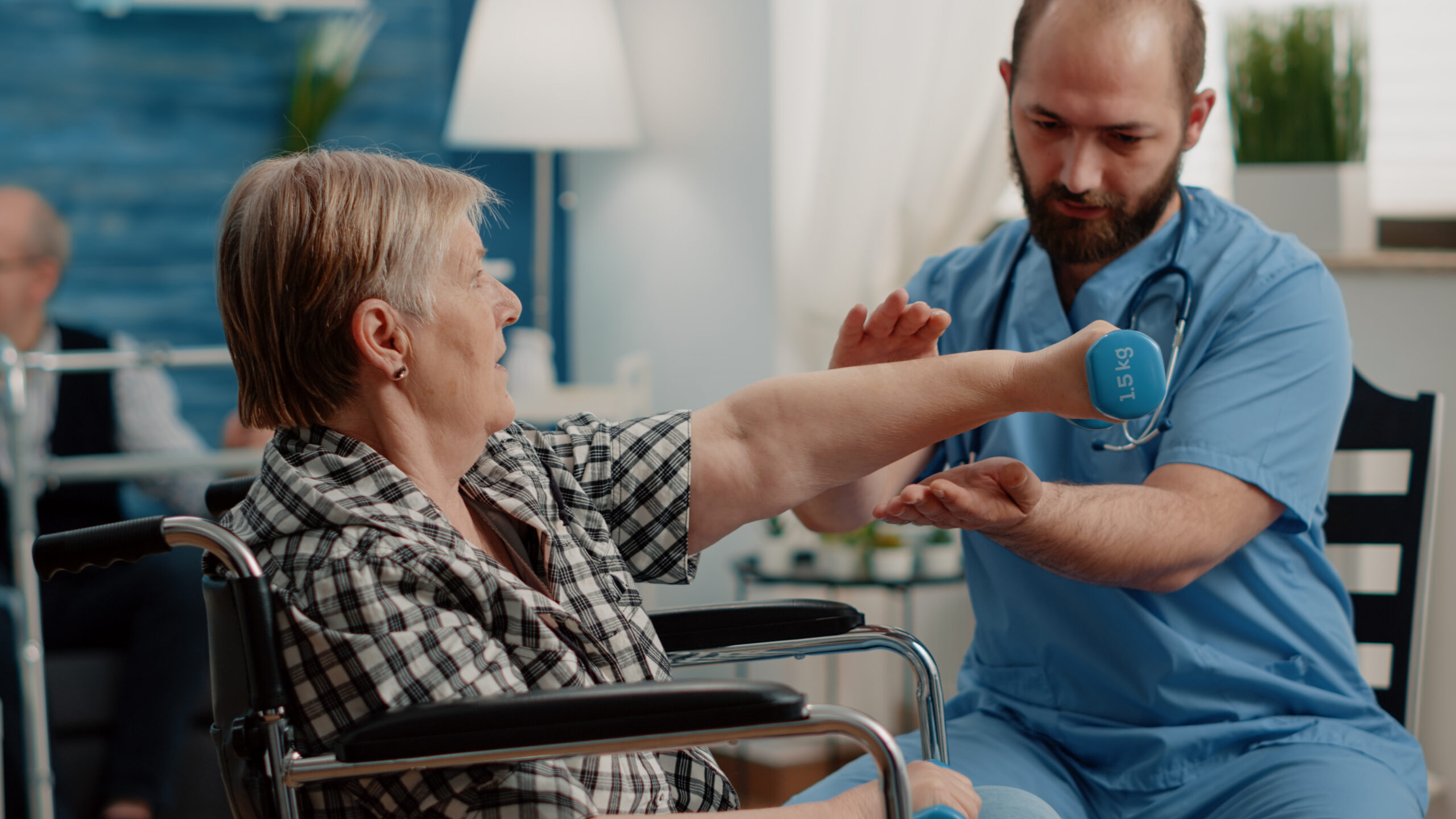
A stroke changes everything in a matter of seconds. One moment your loved one is themselves; the next, they are facing challenges with movement, speech, memory, and independence. For families across Yorkshire — from Leeds and Sheffield to York, Bradford, and Hull — the weeks and months that follow can feel completely overwhelming.
The good news is this: with professional stroke care at home in Yorkshire, your loved one does not have to face recovery in an unfamiliar care home. The right support, delivered in the place they know and love best, can make a profound difference to both recovery outcomes and quality of life.
At Live-in Care Direct, we have supported hundreds of stroke survivors and their families across Yorkshire and the wider UK. In this guide, we will walk you through everything you need to know — what stroke care at home involves, what it costs, how it is funded, what support is available, and how to get started.
What Is a Stroke and Why Does It Demand Specialist Care?
Understanding Stroke: What Happens in the Brain
A stroke occurs when the blood supply to part of the brain is cut off — either by a blockage (ischaemic stroke, which accounts for around 85% of all strokes) or by a bleed in or around the brain (haemorrhagic stroke). Without blood, brain cells begin to die within minutes, which is why immediate emergency treatment is critical.
The effects of a stroke depend entirely on which part of the brain is affected and how quickly treatment is given. Common after-effects include:
- Weakness or paralysis on one side of the body (hemiplegia or hemiparesis)
- Difficulty speaking or understanding language (aphasia)
- Problems with swallowing (dysphagia)
- Memory loss, confusion, or changes in behaviour
- Vision problems
- Fatigue, depression, and anxiety
- Loss of bladder or bowel control
According to the Stroke Association, there are over 100,000 strokes in the UK every year — approximately one every five minutes. Around 1.3 million people in the UK are currently living with the effects of a stroke. In Yorkshire alone, thousands of families every year face the challenge of supporting a stroke survivor through recovery.
What makes stroke different from many other health conditions is how rapidly the situation changes. In the first days and weeks, intensive rehabilitation is critical. Over months and years, consistent, skilled support is what prevents decline, promotes recovery, and prevents secondary strokes. This is why expert nursing care for stroke patients at home — delivered by trained stroke carers — is so important.
What to Do If Someone Is Having a Stroke in Yorkshire
Use the FAST test to identify a stroke:
- FACE — Has their face drooped on one side? Can they smile?
- ARMS — Can they raise both arms and keep them there?
- SPEECH — Is their speech slurred, garbled, or impossible to understand?
- TIME — If you notice any of these signs, Time to call 999 immediately.
Other warning signs include sudden severe headache, sudden loss of vision, sudden confusion, or sudden loss of balance. In Yorkshire, calling 999 will connect you to Yorkshire Ambulance Service, which operates a dedicated stroke pathway to fast-track patients to the nearest stroke unit — at Leeds Teaching Hospitals NHS Trust, York and Scarborough NHS Foundation Trust, Sheffield Teaching Hospitals, or Bradford Teaching Hospitals.
While waiting for the ambulance: keep the person calm and comfortable, do not give them food or water (due to swallowing risk), do not leave them alone, and note the exact time symptoms began — this information is vital for the medical team.
Can You Care for a Stroke Patient at Home in Yorkshire?
This is one of the most common questions we receive from Yorkshire families — and the answer is yes, in the vast majority of cases. Home-based stroke care is not only possible; research and clinical experience consistently show that it delivers better outcomes than institutional care for most survivors.
A study by the NHS and independent care researchers found that stroke patients who received skilled care at home showed greater improvements in functional independence than those placed in residential care. The familiar environment, one-to-one attention, and emotional comfort of home all contribute to faster neurological recovery.
However, caring for a stroke survivor at home requires more than good intentions. It requires:
- A professionally trained stroke carer with experience in post-stroke rehabilitation support
- Proper home adaptations and equipment (grab rails, hospital-grade bed, emergency alarm)
- Coordination with NHS physiotherapists, speech therapists, and occupational therapists
- A structured care plan tailored to the individual’s specific post-stroke needs
- 24/7 availability — because strokes and their complications do not keep office hours
At Live-in Care Direct, we provide all of the above for stroke survivors across Yorkshire. Our stroke carers are matched to each individual client, ensuring continuity of care and a genuine relationship built on trust and familiarity.

Common Mistakes Yorkshire Families Make After a Stroke Diagnosis
In our years of experience supporting families across Leeds, Sheffield, York, and beyond, we have seen the same avoidable mistakes made time and again:
- Assuming the NHS will provide full long-term care. NHS support after stroke is excellent in the acute phase but is time-limited. Long-term daily care at home falls to the family or a private provider.
- Placing the survivor in a care home prematurely. Many families opt for a stroke care home out of fear, without exploring the equally viable — and often preferable — option of live-in care at home.
- Relying solely on hourly home visits. Brief hourly check-ins are often insufficient for a stroke survivor with complex needs. Gaps in care increase the risk of falls, secondary strokes, and deterioration.
- Underestimating carer burnout. Family members who take on full-time care without professional support often experience serious physical and mental health consequences of their own.
- Delaying the request for a care needs assessment. Every Yorkshire resident is entitled to a free care needs assessment from their local council — but families often wait weeks or months to request one.
What Does Stroke Care at Home in Yorkshire Include?
Professional stroke home care delivered by Live-in Care Direct is comprehensive, clinically informed, and personalised to the individual. Here is what our stroke care services in Yorkshire typically include:
Personal Care and Hygiene
After a stroke, everyday tasks like bathing, dressing, oral hygiene, and continence care can become challenging or impossible to manage independently. Our carers provide dignified, respectful personal care while encouraging the survivor to maintain as much independence as possible — a critical principle of stroke rehabilitation.
Mobility Support and Fall Prevention
Mobility problems are among the most common effects of stroke. Our stroke carers assist with safe movement, transfers (bed to chair, chair to bathroom), walking aids, and prescribed physiotherapy exercises. Fall prevention is a top priority — in Yorkshire, falls are the leading cause of emergency hospital readmission for stroke survivors in the first year.
Medication Management
After a stroke, survivors are typically prescribed anticoagulants, antihypertensives, statins, and other medications that must be taken consistently and at the right times. Missed or incorrect medication is one of the biggest risk factors for a secondary stroke. Our carers manage, administer, and record all medications, ensuring nothing is missed.
Speech and Communication Support
For survivors with aphasia or dysarthria (speech problems caused by stroke), communication can be profoundly frustrating. Our carers are trained to work alongside NHS speech and language therapists, reinforcing exercises at home and using communication aids and strategies prescribed by the clinical team.
Nutritional Support and Dysphagia Care
Swallowing difficulties affect up to 50% of stroke survivors. Our carers prepare appropriate meals and snacks in accordance with the dysphagia diet prescribed by the speech and language therapist (IDDSI levels). Maintaining proper nutrition is essential for brain recovery and preventing complications such as chest infections.
Emotional Support and Companionship
Post-stroke depression affects approximately one third of all stroke survivors and is a significant barrier to physical recovery. Our carers provide genuine companionship, emotional reassurance, and mental stimulation — whether that is conversation, gentle activities, reading, or simply being present. For many Yorkshire families, this is the aspect of live-in care that makes the biggest difference.
24/7 Monitoring and Emergency Response
A live-in stroke carer from Live-in Care Direct is present in the home around the clock. This means immediate response to any deterioration, fall, or emergency — including the signs of a recurrent stroke. Our carers are trained in first aid and stroke emergency protocols and will call 999 without hesitation if required.
Live-in Stroke Care vs Hourly Home Visits vs Stroke Care Home: A Comparison
| Feature | Live-in Stroke Care | Hourly Home Visits |
| Availability | 24 hours / 7 days | Limited hours only |
| Consistency | Same carer every day | Rotating carers |
| Emergency Response | Immediate — carer is present | Delayed — nobody present |
| Rehabilitation Support | Full daily integration | Limited within visit window |
| Emotional Continuity | Strong relationship built over time | Minimal — frequent changes |
| Cost vs Care Home | Often comparable or less | Lower cost short-term |
| Best For | Complex or high-dependency recovery | Mild recovery, early phase only |
24/7 Stroke Care in York and Across Yorkshire
For many stroke survivors — particularly those with severe mobility impairment, cognitive changes, swallowing difficulties, or a high risk of secondary stroke — round-the-clock care is not a luxury. It is a clinical necessity.
Our 24/7 stroke care service in York and across Yorkshire means a trained carer lives in the home with the stroke survivor, sleeping nearby and available at any moment. This is fundamentally different from hourly visits, where the survivor can be left alone for hours at a time.

Signs That Your Loved One Needs 24/7 Stroke Care at Home
Consider 24/7 live-in stroke care if your loved one:
- Has experienced a significant stroke with lasting mobility, speech, or cognitive effects
- Is at high risk of falls due to weakness, balance problems, or disorientation
- Has swallowing difficulties that require supervised mealtimes
- Shows signs of post-stroke dementia, confusion, or wandering
- Has had a previous TIA (mini-stroke) and is at elevated risk of a full stroke
- Is being discharged from a Yorkshire NHS hospital and needs immediate support at home
- Has family carers who are exhausted and cannot safely provide round-the-clock care
Our team can arrange a 24/7 live-in stroke carer in Yorkshire at short notice — often within 24 to 48 hours of initial contact. We understand that stroke recovery does not wait, and neither do we.
Stroke Recovery Care at Home: A Stage-by-Stage Guide
Phase 1: Acute Discharge Support (Weeks 1 to 4)
The transition from a Yorkshire hospital ward to home is one of the most vulnerable moments for a stroke survivor. Hospital discharge is often earlier than families expect, and many are left feeling unprepared.
In this phase, our stroke carers work closely with the hospital discharge team, community stroke nurses, and occupational therapists to ensure the home is safe, appropriately equipped, and ready. We attend discharge planning meetings where possible, arrange equipment such as hospital beds and pressure mattresses, and ensure the carer is briefed on the survivor’s specific clinical needs before they arrive home.
Phase 2: Active Rehabilitation (Months 1 to 6)
This is the most critical window for neurological recovery. The brain’s neuroplasticity — its ability to form new connections and recover lost function — is at its highest in the first six months after a stroke. Consistent, skilled daily support during this period can make the difference between partial and full functional recovery.
Our carers work alongside Yorkshire NHS physiotherapists, occupational therapists, and speech therapists to reinforce prescribed exercises and techniques every single day. Rather than rehabilitation happening only during clinic appointments, it becomes woven into every part of the survivor’s daily routine.
Phase 3: Long-Term Stroke Management at Home
For some survivors, the effects of stroke are permanent. Long-term live-in care at home allows individuals to live with dignity, independence, and safety — in their own home, with a carer who knows them deeply. This phase focuses on maintaining function, preventing deterioration, managing medications, supporting mental health, and preventing secondary strokes through consistent lifestyle monitoring.

Stroke Care Services Across Yorkshire and the UK
Stroke Care Across Yorkshire
Live-in Care Direct provides stroke care at home across every corner of Yorkshire, including:
- Leeds — stroke care at home across all Leeds postcodes
- Sheffield — specialist stroke recovery support in Sheffield
- Bradford — live-in stroke carers available throughout Bradford
- York — 24/7 stroke care in York and the surrounding villages
- Hull — stroke home care across Kingston upon Hull
- Harrogate — live-in stroke care in Harrogate and Knaresborough
- Wakefield, Doncaster, Rotherham, Barnsley, and all surrounding towns
Whether you are in a city centre or a rural Yorkshire village, we can arrange a qualified stroke carer to come to you. Our secure database of hundreds of qualified carers means we can match the right person to your loved one — typically within 48 hours.
Stroke Care Beyond Yorkshire: We Cover the Entire UK
Live-in Care Direct provides stroke care services across the whole of England, Wales, and Scotland. Our regional coverage includes:
- London — live-in stroke care across all London boroughs
- South East — Surrey, Kent, East Sussex, West Sussex, Berkshire, Hampshire, Oxfordshire
- East Midlands — Nottingham, Leicester, Derby, Lincoln, Northampton
- North East — Newcastle upon Tyne, Sunderland, Durham, Middlesbrough, Gateshead
- North West — Manchester, Liverpool, Preston, Chester, Blackpool, Lancaster
- South West — Bristol, Bath, Exeter, Plymouth, Cheltenham, Gloucester
- Wales — Cardiff, Swansea, Newport, Wrexham, Bridgend
- West Midlands — Birmingham, Coventry, Wolverhampton, Stoke-on-Trent
- Essex — Chelmsford, Colchester, Southend-on-Sea, Harlow, Basildon
- East of England — Cambridge, Norwich, Ipswich, Luton, Peterborough
- Scotland — Edinburgh, Glasgow, Aberdeen, Inverness, Dundee
| Note Wherever you are in the UK, Live-in Care Direct can arrange professional stroke care at home — often within 24 to 48 hours of your first call. |
How Much Does Stroke Care Cost in Yorkshire?
Cost is one of the first questions families ask, and it is a completely understandable one. Here is an honest overview of what you can expect to pay for stroke care services in Yorkshire.
Stroke Care Cost Comparison in Yorkshire
| Care Type | Approximate Weekly Cost in Yorkshire |
| Live-in stroke care at home | £900 to £1,500 per week |
| Residential stroke care home | £800 to £1,200 per week |
| Yorkshire nursing care home | £1,000 to £1,800 per week |
| Hourly domiciliary care | £20 to £30 per hour |
| 24/7 family care (unpaid) | Immeasurable personal cost |
As the table shows, live-in stroke care at home in Yorkshire is often comparable in cost to a residential nursing home — and many families find it significantly better value when the quality of one-to-one care and the benefits to the survivor are considered.
Costs vary depending on the complexity of the survivor’s needs, the level of nursing support required, and location within Yorkshire. We always provide a transparent, personalised quote with no hidden fees.
Who Pays for Care After a Stroke in Yorkshire?
Funding for after stroke care at home in Yorkshire can come from several sources:
- NHS Continuing Healthcare (CHC) — If your loved one has a primary health need arising from the stroke, they may qualify for fully NHS-funded care. This means the NHS pays for all care costs, regardless of your savings or assets. Request a CHC Checklist Screening from the hospital team before discharge — this is your legal right.
- Local Authority Funding — Leeds City Council, Sheffield City Council, Bradford Council, and other Yorkshire local authorities offer means-tested funding for care. A free care needs assessment from the council is the starting point. Those with assets under the threshold (currently £23,250 in England) may receive partial or full funding.
- NHS-Funded Nursing Care (FNC) — A weekly contribution from the NHS toward the nursing element of care, currently £235.88 per week in England (2024/25). Applicable to those in nursing care settings including live-in care with nursing needs.
- Direct Payments — Rather than receiving council-arranged care, some Yorkshire families opt for Direct Payments — a sum of money from the council that you use to hire and manage your own carer. This gives greater flexibility and control.
- Self-Funding — For those who do not qualify for public funding, self-funding live-in stroke care is a straightforward and dignified option. We can advise on managing costs and payment structures.
- Deferred Payment Agreements — Yorkshire councils offer deferred payment schemes that allow you to use the value of your loved one’s property to fund care, with repayment deferred until the property is sold.
| IMPORTANT: Never assume you do not qualify for NHS funding. Many Yorkshire families miss out on NHS Continuing Healthcare funding simply because they did not know to ask. Always request a formal CHC assessment before accepting any care costs. |
What Support Is Available for Stroke Survivors in Yorkshire and the UK?
Stroke survivors and their families in Yorkshire can access a range of statutory, charitable, and private support:
NHS and Statutory Support in Yorkshire
- Community Stroke Rehabilitation Teams — Available through Leeds, Sheffield, Bradford, and York NHS Trusts, providing physiotherapy, occupational therapy, and speech therapy at home
- Community Nurses — GP-referred community nurses for wound care, catheter care, and clinical monitoring
- Social Services Occupational Therapy — Free home adaptations assessment and installation of grab rails, ramps, and stair lifts through Yorkshire councils
- Continuing Healthcare — Full NHS-funded care for eligible individuals (see costs section above)
Charitable and Third-Sector Support
- The Stroke Association — National charity with local support groups across Leeds, Sheffield, and York. Helpline: 0303 3033 100
- Different Strokes — Support and information specifically for younger stroke survivors
- Headway Yorkshire — Support for stroke survivors with acquired brain injury
- Age UK West Yorkshire — Befriending, welfare advice, and community support for older stroke survivors
- Carers UK — Advice and support for family members and unpaid carers
Private Stroke Care — Bridging the Gaps
NHS and charitable support, while valuable, has well-known limitations. Waiting lists for NHS community rehabilitation teams in Yorkshire can be weeks long. Physiotherapy sessions are time-limited. There is no statutory provision for 24/7 personal care at home.
This is where private live-in stroke care from Live-in Care Direct bridges the gap — providing immediate, intensive, round-the-clock support that the NHS simply cannot offer, and ensuring your loved one’s recovery is never put on hold.
Preventing Secondary Strokes and Maintaining Recovery at Home
The Risk of a Second Stroke
The risk of a recurrent stroke is highest in the first few weeks after the initial event. Approximately 1 in 4 strokes are recurrent strokes, and recurrent strokes are often more severe than the first. Preventing a secondary stroke is therefore one of the most important goals of after stroke care at home.
How Live-in Carers Help Prevent Secondary Strokes
A skilled live-in stroke carer plays an active role in secondary prevention by:
- Ensuring all prescribed medications are taken correctly and on time, every single day
- Monitoring blood pressure regularly and reporting concerning readings to the GP
- Preparing heart-healthy, low-sodium meals and managing the survivor’s diet
- Encouraging light physical activity in line with the physiotherapist’s recommendations
- Supporting smoking cessation and alcohol reduction where relevant
- Recognising early warning signs of TIA (mini-stroke) and acting immediately
Home Safety Adaptations for Stroke Survivors in Yorkshire
Adapting the home environment is an essential part of safe stroke recovery. Key adaptations include:
- Grab rails in bathrooms, hallways, and stairways
- Non-slip flooring and removal of trip hazards
- Raised toilet seat and shower chair
- Hospital-grade adjustable bed if required
- Personal emergency alarm or fall detection device
- Stair lift or through-floor lift where needed
Yorkshire councils can provide some adaptations free of charge through the Disabled Facilities Grant (DFG), which provides up to £30,000 for eligible home modifications.
When to Call a Professional Stroke Care Provider in Yorkshire
Knowing when to reach out for professional stroke care support is one of the most important decisions a Yorkshire family can make. Here are the key situations in which you should contact Live-in Care Direct without delay:
- Your loved one has just been told they are being discharged from a Yorkshire hospital after a stroke — often with very short notice.
- You or other family members are providing unpaid care but are struggling with exhaustion, burnout, or the complexity of the survivor’s needs.
- The stroke survivor is at high risk of falls, secondary stroke, or medical complications that require monitoring.
- Your loved one is refusing to move into a care home, but their needs exceed what family members can safely provide.
- Current hourly domiciliary care visits are no longer meeting the survivor’s needs.
- A GP, consultant, or discharge nurse has recommended 24/7 nursing care at home.
- You need emergency stroke care arranged urgently — within 24 hours.
| Our team is available 8am to 10pm, 7 days a week Call us on 0800 368 8558 or email info@liveincaredirect.org — we will listen, advise, and arrange care without pressure or obligation. |
Why Choose Live-in Care Direct for Stroke Care in Yorkshire?
There are many care providers in Yorkshire. Here is why families consistently choose Live-in Care Direct for stroke care at home:
Specialist Stroke Care Expertise
Our carers are not generalists. We carefully match each stroke survivor to a carer with specific training and experience in post-stroke rehabilitation support, medication management, dysphagia care, and neurological conditions. Our carers understand the clinical complexity of stroke and work as part of the wider healthcare team.
One-to-One Dedicated Care
Unlike a care home where staff are shared across many residents, our live-in carers are dedicated entirely to your loved one. The same carer, same routine, same familiar face — every single day. This consistency is not just comforting; it is clinically beneficial for brain recovery.
State-of-the-Art Technology
Live-in Care Direct has invested heavily in secure digital care management systems that allow families to stay informed about their loved one’s care, log notes, track progress, and communicate with the care team in real time. Transparency is built into everything we do.
Rapid Response — Available Within 24 to 48 Hours
Strokes and post-stroke crises do not give advance notice. We can arrange emergency stroke care at home in Yorkshire at very short notice. Our extensive database of qualified carers across the UK means we are never caught short.
Transparent, Honest Pricing
We provide clear, written quotes before any care begins. No hidden fees, no surprises. We also advise families on all available funding options to ensure they do not pay a penny more than they need to.
Trusted by Families Across Yorkshire and the UK
Our reviews speak for themselves. Families in Leeds, Sheffield, Bradford, York, Hull, and across the UK have trusted Live-in Care Direct with the care of their loved ones. We take that trust seriously and work hard every day to deserve it.
| Get Expert Stroke Care at Home in Yorkshire Today Speak to a specialist care coordinator. Free, no-obligation assessment available. Phone: 0800 368 8558 | Email: info@liveincaredirect.org Web: www.liveincaredirect.org/our-services/stroke-care.php |
Do not wait until a crisis forces your hand. The earlier you put professional stroke care in place, the better the outcomes for your loved one. Call us today, and let us help your family take the next step with confidence.
Stroke Care in Yorkshire
Q1: Can you care for a stroke patient at home in Yorkshire?
Yes — with a trained live-in stroke carer, most stroke survivors in Yorkshire can be safely and effectively cared for at home, often achieving better recovery outcomes than in a care home, while maintaining their independence and familiar surroundings.
Q2: How much does stroke care cost in Yorkshire?
Live-in stroke care in Yorkshire typically costs between £900 and £1,500 per week depending on the complexity of care required, which is often comparable to or less than the cost of a residential nursing care home in the region.
Q3: Who pays for care after a stroke in Yorkshire?
After-stroke care in Yorkshire can be funded through NHS Continuing Healthcare, Yorkshire local authority means-tested funding, NHS-Funded Nursing Care contributions, Direct Payments, Deferred Payment Agreements, or private self-funding — always request a formal CHC assessment before paying privately.
Q4: What support is available for stroke victims in Yorkshire and the UK?
Stroke survivors in Yorkshire can access NHS community rehabilitation teams, occupational therapy, the Stroke Association’s local groups, Age UK Yorkshire, Headway Yorkshire, and professional live-in care agencies like Live-in Care Direct for 24/7 home-based support.
Q5: What is the difference between a stroke care home and stroke care at home?
A stroke care home places the survivor in a residential facility, while stroke care at home keeps them in their own property with a dedicated live-in carer who provides one-to-one support 24 hours a day — an option that is often preferred by survivors, clinically beneficial, and comparably priced.
Q6: What should I do if someone is having a stroke in Yorkshire?
Use the FAST test (Face, Arms, Speech, Time) and call 999 immediately if you notice any symptoms — Yorkshire Ambulance Service operates a dedicated stroke pathway to fast-track patients to the nearest stroke unit for emergency treatment.
Q7: How quickly can Live-in Care Direct arrange stroke care in Yorkshire?
Live-in Care Direct can typically arrange professional stroke care at home in Yorkshire within 24 to 48 hours of initial contact, making us a reliable option for emergency stroke care situations following hospital discharge.