
A practical, compassionate guide for families across London — from the team at Live-in Care Direct
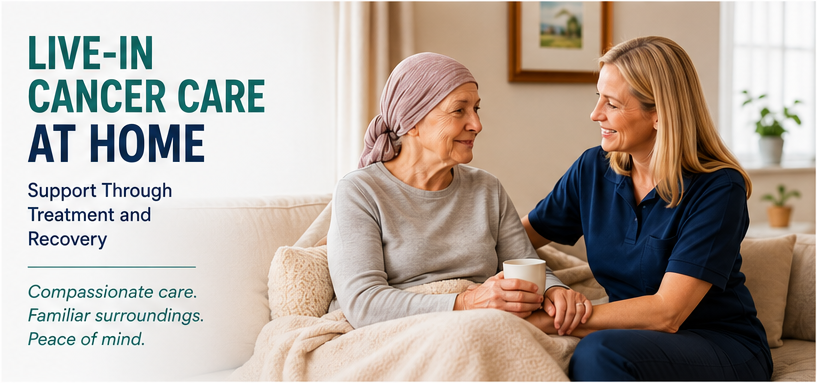
Live-in cancer care at home means a trained, carefully matched carer lives in your loved one’s home and provides one-to-one support through treatment and recovery — from personal care, medication and symptom monitoring to nourishing meals, transport to appointments and genuine companionship. For many London families, it is the reassuring alternative to long hospital stays or a move into a care home, allowing someone living with cancer to stay safe, comfortable and independent in familiar surroundings.
A cancer diagnosis turns a whole family’s world upside down. If you are caring for someone you love and wondering how you will manage the appointments, the side effects and the worry — especially while juggling work and life in a busy city like London — this guide is for you. We will explain exactly how cancer care at home works, what it costs, how to fund it, and how to know when it is time to bring in professional help.
What Is Live-in Cancer Care at Home?
Live-in cancer care is a form of in-home care where a professional carer lives in the home and supports a person living with cancer around the clock. Rather than a rota of different faces, one consistent cancer carer gets to know your loved one’s routine, preferences and needs, and works alongside their oncology and community nursing teams. It covers everything from day-to-day help to specialist palliative and end of life cancer care at home.
How Live-in Care Compares to Hospital, Hospice and Hourly Visits
Families often weigh up several options. Here is how they differ:
• Live-in care at home: one-to-one support in familiar surroundings, day and night, with continuity and companionship.
• Hospital or hospice: excellent for acute and specialist clinical needs, but shared, unfamiliar, and away from home.
• Hourly home visits: helpful for lighter needs, but care is fragmented and no one is there overnight.
For someone going through chemotherapy or recovering from surgery, that continuity can make a real difference to comfort, confidence and peace of mind.

Why London Families Choose Cancer Care at Home
London is home to some of the country’s leading cancer centres — The Royal Marsden, University College Hospital (UCLH), Guy’s & St Thomas’ and Barts Health among them. But living with cancer in the capital brings its own pressures. Frequent journeys across the city for treatment are exhausting; parking near hospitals is difficult and costly; many homes are flats or have stairs; and family members are often working long hours or living in a different borough entirely.
Take a common scenario: when a mother in Camden begins chemotherapy at UCLH, her daughter in Croydon simply cannot make the daily journey to help with meals, medication and recovery between cycles. A live-in cancer carer bridges that gap — providing steady, professional support at home so the family can focus on being family again. Across boroughs from Islington and Westminster to Richmond, Bromley and Ealing, this is exactly why more London families are choosing home care for cancer patients over repeated hospital stays.
According to Macmillan Cancer Support, around three million people are living with cancer in the UK today, a number projected to rise to 5.3 million by 2040. As more people live longer with cancer, the demand for compassionate, professional cancer care support at home continues to grow.
How a Live-in Cancer Carer Supports You Through Every Stage
Cancer is a journey with very different phases, and good care adapts to each one.
During Chemotherapy and Radiotherapy
Treatment brings fatigue, nausea, appetite changes and a higher risk of infection. A cancer carer helps manage these day to day, encourages rest and hydration, prepares appetite-friendly meals, and provides reliable transport to and from chemotherapy and clinic appointments across London — so a missed bus or unavailable relative never means a missed treatment.
Recovering After Surgery
After an operation, chemotherapy recovery care at home focuses on regaining strength safely: supporting mobility, liaising with district nurses on wound care, managing medication, and watching for any signs of complications — all of which helps reduce the risk of an avoidable hospital readmission.
Palliative and End of Life Cancer Care at Home
When the focus shifts to comfort, palliative cancer care at home helps your loved one live as well as possible for as long as possible. Working alongside GPs, district and Macmillan nurses, a live-in carer supports pain and symptom management, dignity and emotional wellbeing. For families facing the hardest stage, our carers also provide gentle, around-the-clock terminal cancer care at home, so precious final time can be spent together in familiar surroundings rather than on a ward.
What Does a Cancer Carer Do? A Daily Support Checklist
A live-in cancer carer does far more than people expect. Typical support includes:
✓ Personal care — washing, dressing and continence support, always with dignity
✓ Medication management and symptom monitoring, in step with the oncology team.
✓ Nutritious, appetite-friendly meals and help with hydration.
✓ Transport and accompaniment to chemotherapy, radiotherapy and clinic appointments.
✓ Liaison with GPs, district nurses and Macmillan nurses.
✓ Emotional support and companionship for the person — and reassurance for the family.
✓ A clean, low-infection-risk home and light housekeeping.
Because care is one-to-one, it flexes around your loved one’s exact needs, not a fixed timetable.
Managing Symptoms and Side Effects Safely at Home
A few simple habits make daily life more comfortable during treatment:
• Offer small, frequent meals to ease nausea and tempt a low appetite.
• Encourage gentle activity and plenty of rest to manage fatigue.
• Keep hydration up, and care for skin gently during radiotherapy.
• Maintain good hand hygiene and a clean home to reduce infection risk.
| Safety warning — know the red flags Chemotherapy can weaken the immune system, making infection dangerous. Seek urgent medical advice if your loved one develops a temperature above 37.5°C, uncontrolled bleeding or bruising, breathlessness, confusion, severe pain or persistent vomiting. Suspected neutropenic sepsis is a medical emergency — call the chemotherapy helpline number on their treatment card, or 999, without delay. |

Common Mistakes Families Make (and How to Avoid Them)
After years of supporting London families, we see the same avoidable pitfalls again and again:
1. Waiting too long. Families often soldier on until burnout or a crisis. Arranging support earlier keeps everyone healthier.
2. Underestimating the toll on the family carer. Caring for someone with cancer is physically and emotionally draining — you cannot pour from an empty cup.
3. Assuming home care is unaffordable. Many families are surprised it can cost about the same as a care home, and that funding may be available.
4. Not asking about funding early. Fast-track NHS funding exists for those nearing end of life — ask before you need it.
5. Choosing on price alone. Vetting, experience and a good personality match matter far more than a few pounds a week.
How Much Does Cancer Care at Home Cost in London?
Cancer care at home cost depends on the level of support needed — whether it is daytime help, full live-in care, 24 hour cancer care, or specialist palliative support. London-specific factors can also play a part. Because every situation is different, we always provide a clear, tailored quote with no hidden charges, and for couples a single carer can often support both people for a similar cost. Reassuringly, live-in care is frequently comparable to — and sometimes cheaper than — a residential care home, with far more one-to-one attention.
Funding and Financial Help
You may not have to fund everything yourselves. Options worth exploring include:
• NHS Continuing Healthcare (CHC): fully funded care for those with significant health needs, with a fast-track route for people nearing the end of life.
• Local authority support: following a care needs assessment from your London borough’s adult social services.
• Macmillan grants and Attendance Allowance: additional help many families are entitled to but never claim.
| Insider tip Ask your Macmillan nurse or hospital social worker about fast-track Continuing Healthcare funding as early as possible — it can be arranged quickly when time matters most. |

Cancer Care at Home Across London — and the Wider UK
Live-in Care Direct provides cancer care across every London borough — including Camden, Islington, Westminster, Southwark, Lambeth, Wandsworth, Richmond, Kingston, Bromley, Croydon, Barnet and Ealing. Wherever your loved one lives in the capital, we can match an experienced cancer carer to their needs.
Our nationwide network also means we support families well beyond London. We provide oncology home care and live-in care for cancer patients across:
| Region | Region |
| South East | North West |
| East of England | North East |
| Essex | Yorkshire |
| West Midlands | South West |
| East Midlands | Wales |
| Greater London | Scotland |
So whether you are in a London flat in Hackney, a family home in Essex, or a village in Yorkshire or Wales, the same standard of compassionate cancer home care is available.

Staying Strong: Wellbeing and Recovery Tips
Alongside treatment, these everyday steps help your loved one stay as strong and well as possible:
1. Prioritise nutrition and hydration to maintain strength and a healthy weight.
2. Build in gentle, approved movement to rebuild stamina and lift mood.
3. Protect against infection — hand washing, a clean home, and asking unwell visitors to stay away.
4. Look after mental wellbeing through companionship, routine and reducing isolation.
5. Keep on top of medication and appointments to help prevent avoidable hospital readmissions.
When to Call a Professional in London
It can be hard to know when family support is no longer enough. It may be time to arrange professional live-in cancer care if:
• Pain, fatigue or symptoms are becoming difficult to manage at home.
• Your loved one is losing weight, having falls, or struggling with daily tasks.
• The family carer is exhausted, anxious or unwell themselves.
• A hospital discharge is approaching and home isn’t yet set up for recovery.
• Overnight support or 24 hour cancer care is needed.
In a genuine medical emergency — such as suspected neutropenic sepsis — always call 999 or the chemotherapy helpline first. For planned support, our London team can usually arrange a fully vetted carer within 48 hours, including help straight from hospital discharge.
Why Choose Live-in Care Direct for Cancer Care in London
Families across London trust us because we combine genuine expertise with genuine warmth:
• Specialist experience. Our complex-care services are led by Jennifer King MBE, and we match carers experienced in oncology and palliative support.
• Carefully vetted carers. Every carer is enhanced DBS-checked, and we are rated 4.9 on Google by more than 3,000 UK families.
• You choose your carer. Pick from matched profiles and meet them first — one consistent carer, not a rota of strangers.
• Fast, when it matters. Care arranged in as little as 48 hours, with backup cover, working alongside London’s oncology and district nursing teams.
• Honest and transparent. Clear pricing, no hidden charges, and straightforward advice about funding and how our service works.

Get Compassionate Cancer Care at Home in London
Caring for a loved one with cancer is one of the hardest things a family ever does — but you do not have to do it alone. Whether you need support through chemotherapy, help recovering after surgery, or compassionate palliative and end of life cancer care at home, our friendly London team is here with honest, no-pressure advice.
| Call us free on 0800 368 8558, 8am–10pm, 7 days a week, or request a callback and explore our Cancer Care service. We can arrange a carefully matched live-in carer in as little as 48 hours. |
Local FAQs for Cancer Care at Home
What is live-in cancer care at home?
It is when a trained carer lives in your loved one’s home and provides one-to-one support through cancer treatment and recovery, so they can stay safe and comfortable at home in London.
How much does cancer care at home cost in London?
The cost depends on the level of support needed, and we provide a clear tailored quote with no hidden charges plus help exploring funding such as NHS Continuing Healthcare.
Can a live-in carer support someone having chemotherapy in London?
Yes, a carer helps manage side effects, supports infection precautions, and provides transport to and from chemotherapy appointments at London hospitals alongside the oncology team.
Do you provide palliative and end of life cancer care at home?
Yes, we provide compassionate palliative and end of life cancer care at home across London, working with GPs and district and Macmillan nurses to keep your loved one comfortable and dignified.
How quickly can cancer care at home start in London?
In most cases we can arrange a fully vetted live-in carer within 48 hours, including urgent situations and hospital discharges.
Is live-in cancer care cheaper than a care home?
It is often comparable to or cheaper than a residential care home, and for couples one carer can support both people for a similar cost, with far more one-to-one attention.
Do you provide cancer care outside London?
Yes, we provide cancer care at home across the UK, including the South East, Essex, the Midlands, the North, the South West, Wales, Yorkshire, the East of England and Scotland.
Disclaimer: This guide is general information, not medical advice. Always follow guidance from your loved one’s oncology team, GP and the NHS, and seek urgent help in an emergency.